Blindfolding
Bird BoxBlindfolding is the central survival practice through which Malorie and the children adapt to a world where seeing the creatures can be fatal. It is more than a covering for the eyes: it shapes the house, governs the children’s upbringing, and turns listening into a trained means of navigating danger. The practice preserves life by limiting sight, but it also restricts movement and choice, leaving Malorie to lead her family through spaces she cannot see.
Purpose and Setting
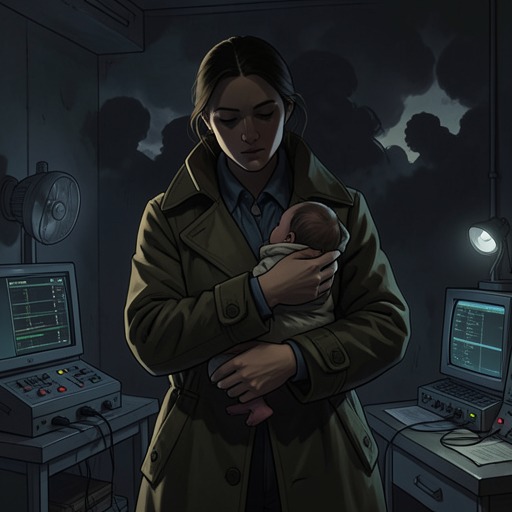
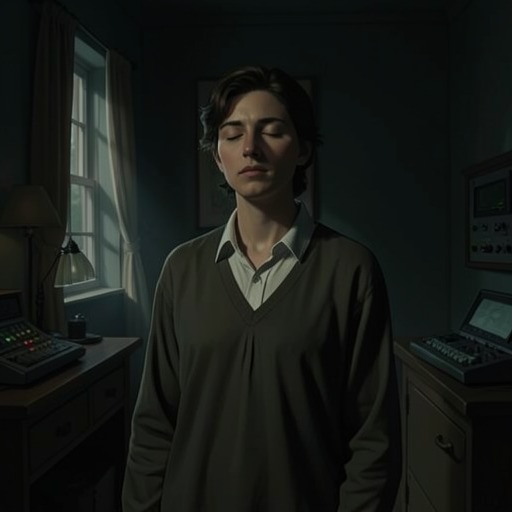
At the house outside Detroit, the defenses are built into the architecture of ordinary life. The windows are covered with cardboard and wood, the family has no running water, and wires connected to amplifiers alert Malorie and the children to sounds outside. When the family does go outdoors, they are blindfolded. The children have never seen the world beyond the house, not even through its windows, and Malorie has not looked outside for more than four years.
The children’s bedroom makes the logic of the practice especially clear. Blankets block its only window, and black domes fashioned from chicken wire and cloth sit over the children’s mattresses. The wire had once enclosed a small garden near the well; repurposed as armor, it protects the children not from being seen but from seeing. Malorie removes the domes and prepares their blindfolds when she wakes them, carrying the household’s rule from the protected bedroom into the day’s movement.
Blindfolding answers a danger that cannot be managed by ordinary observation. The family cannot safely use sight to inspect its surroundings, so the windows are sealed and the children are taught to keep their eyes closed. Protection therefore depends on deliberately surrendering information that people normally use to orient themselves. The house becomes a refuge through concealment, but the same concealment also makes each excursion a test of memory, hearing, and trust.
Rules and Training
Malorie makes the rule absolute: neither child may remove a blindfold. She threatens punishment if either disobeys and insists that they listen for sounds beyond the river and woods, including animals on land or anything in the water. Blindfolding is thus paired with a substitute skill. The children are not simply told what not to do; they are instructed to turn their attention outward through hearing and to report what they detect.
That listening is practiced long before the river escape. When the children were babies, Malorie trained them to wake with their eyes closed. If one opened their eyes, she struck the child’s arm with a flyswatter; if the child kept their eyes closed, she fed them. The lesson joined a necessary protective habit to punishment and reward, establishing the rule at an age when the children could not understand the danger for themselves.
At three, the children were also trained to fetch water from the well. Malorie tied herself to the Boy with a rope and sent him along the path by feeling his way with his toes. When he dropped the bucket, she made him return and try again. The Girl resisted, describing the ground as uneven and frightening; Malorie withheld food until she agreed to do the task. These episodes show how the blindfolded household’s safety depends on teaching children to perform practical work without sight, while the training imposes hardship and narrows the space for refusal.
Malorie also tested their ability to locate people by sound and movement. When the children were toddlers, she walked around the living room and asked where she was, then left and asked where she had been. She shouted when they got the answers wrong. Such exercises turn perception into a discipline measured for accuracy. The children become exceptionally attentive listeners, but that capacity is produced through a severe routine rather than through the ordinary freedoms of childhood.
Blindfolds Beyond the House
On the river, blindfolding becomes an immediate condition of travel. Malorie orders the children to keep their coverings in place and to listen carefully for signs of animals or activity in the water. Her instructions make them collaborators in navigation: she cannot watch the riverbanks, so the children’s reports matter to the family’s safety.
The boat’s movement demonstrates the limits of that system. Blindfolded rowing is harder than Malorie expected, and the boat repeatedly strikes the banks and becomes stuck for several minutes. During these delays she imagines unseen hands reaching toward the children’s covered eyes. The children neither scream nor complain; their patience reflects the discipline she has instilled, even as the repeated collisions expose how little control the family has over its route.
The Boy helps free the boat by standing and pushing against a moss-covered trunk, after which Malorie resumes paddling. As the morning advances, she hears birds in the trees, animals among the foliage, and fish splashing in the water. The sounds indicate movement and life around them, but none of it becomes visible. Blindfolding makes the river journey an encounter with a landscape that can be heard in detail but not inspected directly.
The policy also meets resistance from outside the family. A man on the river urges Malorie to let the children see the day, presenting sight as a chance she is denying them. She tells him to stay away from the boat. His appeal exposes the conflict between protection and access: what he frames as a beautiful view, Malorie must treat as a mortal risk. The children keep their blindfolds on and do not follow his appeal, despite his being the first living human voice beyond their family that they have heard.
Cost, Risk, and Meaning
The practice protects the children, but it cannot remove danger from their lives. Malorie has to navigate the river without sight while also worrying about the possibility that one of the children could fall into the water. When her shoulder is badly injured during the journey, she imagines needing a hospital and fears that she and the children could die without help. Her injury makes the bodily cost of blindfolded travel concrete: the route continues even when its guide is hurt, and stopping or seeking assistance may not be safe or possible.
Blindfolding also carries the weight of Malorie’s losses. In the earlier world, Shannon is found dead at home, and Tom later tells Malorie that his daughter Robin died by suicide after the crisis began. These deaths do not establish that blindfolding could have prevented either loss; rather, they mark the catastrophe within which Malorie’s protective rules take shape. Safety is pursued amid bereavement and social collapse, not in conditions where a reliable or painless choice is available.
At the same time, the story places limits on what blindfolding can promise. A man argues that the children should be allowed to see, and Malorie refuses; the scene does not make his appeal safe or her decision costless. Instead, it stages the governing dilemma of the practice: sight offers contact with the world, while exposure to that world may destroy the person who looks. Blindfolding becomes both shield and deprivation, and its necessity is measured by the danger it prevents as well as the life it confines.
The river route intensifies that dilemma. Rick tells Malorie that the river lies close behind the house and that the family must travel at least twenty miles; he warns that the route is dangerous and that the river will split. Blindfolding makes this escape possible only through a combination of learned listening, the children’s discipline, and Malorie’s willingness to proceed without visual confirmation. Its decisive significance is therefore practical and emotional at once: it keeps the family moving through a world that cannot safely be seen, while making the limits and costs of that survival impossible to ignore.